
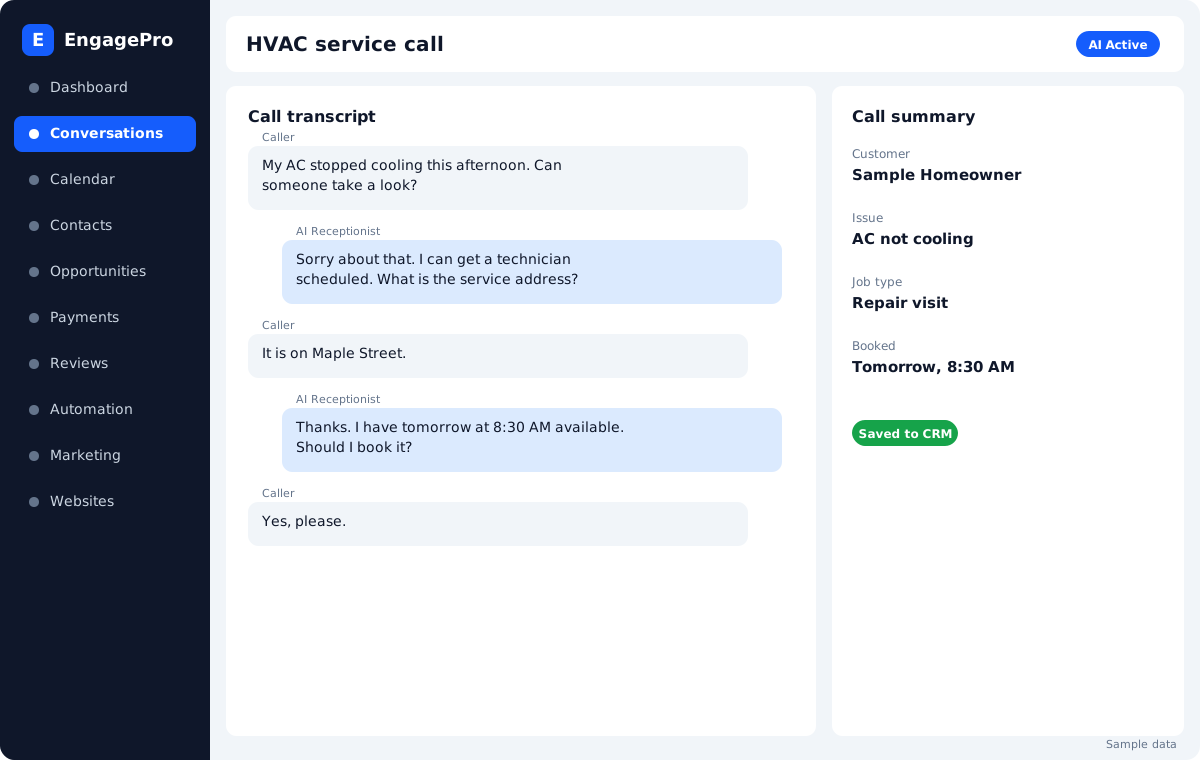
HVAC companies can handle after-hours calls by combining an AI receptionist or answering service, an instant missed call text back, online booking and a clear on-call process. The goal is to respond right away, capture the details, book routine work and send true emergencies to the right person.
Why do after-hours calls matter?
When a system fails, a homeowner wants an answer now. If they reach voicemail, they may simply call the next company. A quick response gives you the chance to keep that job, even if the visit happens the next morning.
What should happen when a call comes in after hours?
- Answer it: use an AI receptionist or send an instant text back.
- Capture the details: get the name, address, issue and system type.
- Sort the urgency: separate emergencies from routine service.
- Book or route: book routine calls and transfer urgent ones to your on-call technician.
- Confirm: send a text so the customer knows what happens next.
How should you handle emergencies?
Define what counts as urgent for your company and test how those calls are routed. Your AI should collect details and route the call, not give repair or safety advice. If someone reports a gas smell or another danger, direct them to emergency services and your gas utility as appropriate.
How can you turn this into more booked work?
Connect after-hours answering to your CRM so every call becomes a record. Then follow up on open estimates and ask for a review after the job. See how EngagePro works for HVAC companies.