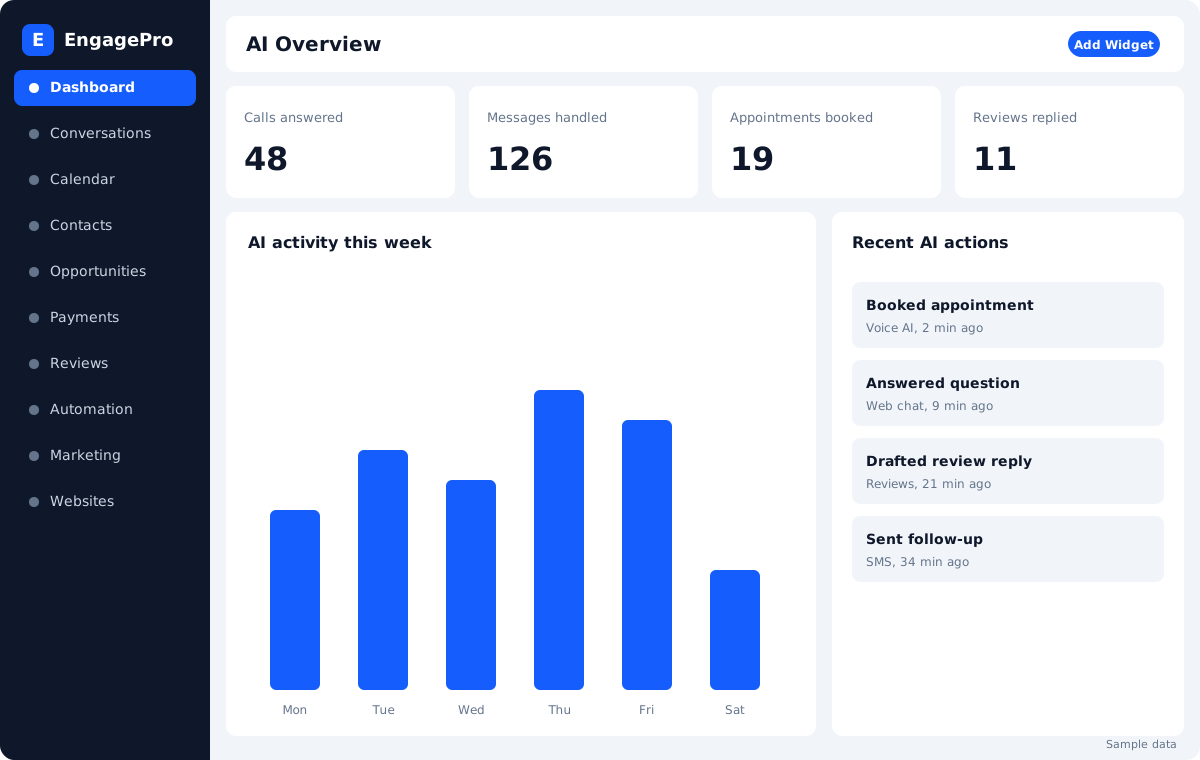
An AI receptionist uses software to answer calls, while an answering service uses live agents. AI is often the better fit for routine calls, booking and CRM updates at any hour. A live service can be a better fit when calls are complex or emotional. Many businesses can combine AI with human backup.
What is the main difference?
A live answering service gives callers a person, usually following a script. An AI receptionist follows your instructions and can connect directly to your calendar and CRM, so it can book the appointment and record the details itself.
When is an AI receptionist the better fit?
- You want calls answered after hours and on weekends
- Most calls are about hours, services, availability and booking
- You want details added to your CRM automatically
- You want a follow-up text sent right after the call
When is a live answering service the better fit?
- Your calls are often complex or emotional
- Callers strongly expect to speak with a person
- Your industry has requirements that need human handling
What should you compare before you decide?
Look at the calls you actually receive. List your most common call types, then ask which ones need judgment and which follow a pattern. Compare how each option handles booking, transfers, after-hours calls and CRM updates. When comparing cost, include setup, per-minute or per-call charges and phone fees.
Can you use both?
Yes. A common approach is to let AI handle routine calls and transfer anything sensitive or urgent to your team or on-call person. Read how the EngagePro AI Receptionist works, or review the EngagePro FAQ.